
Hardscape Design and Build in Denver: Built for Colorado
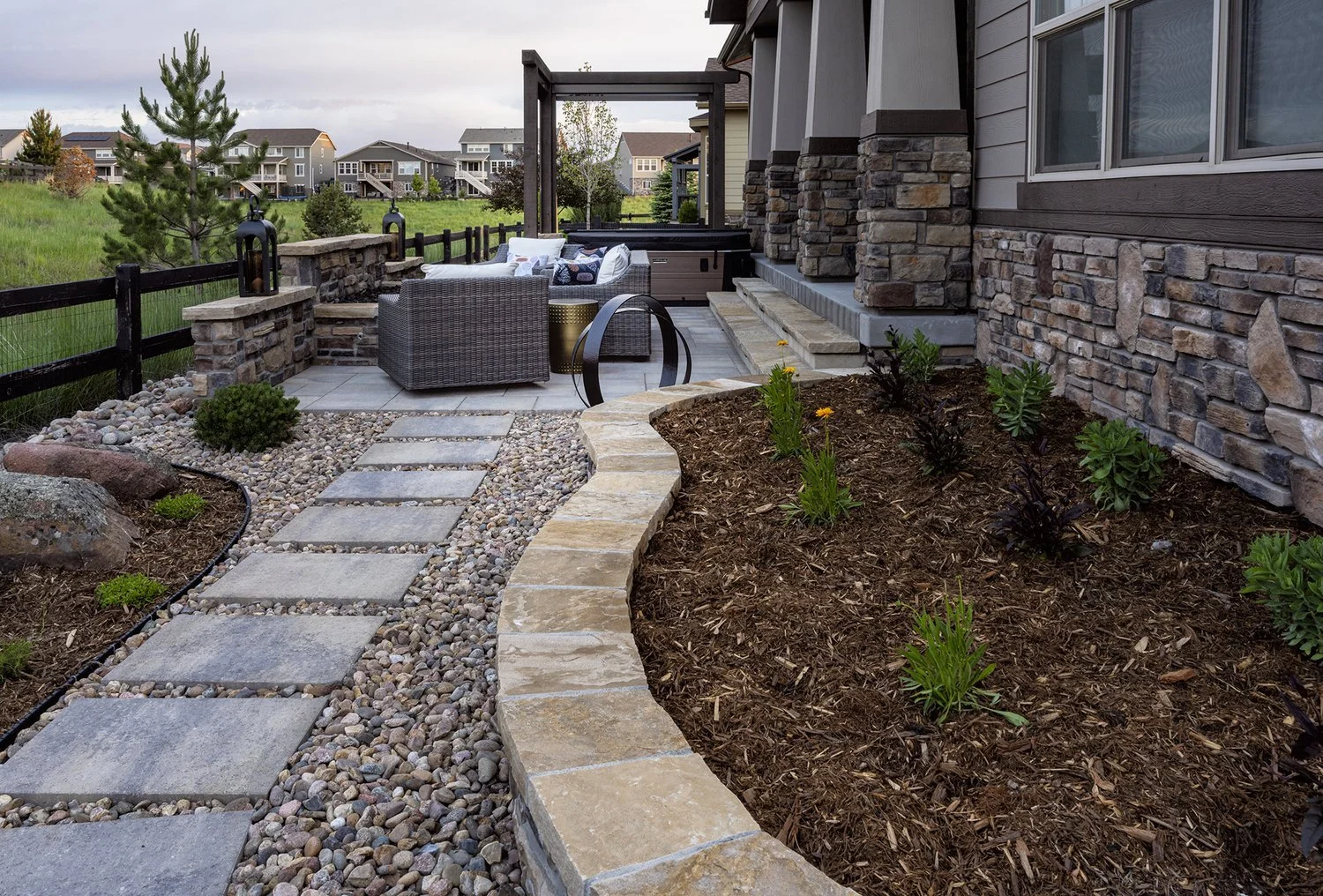
Colorado puts outdoor surfaces through conditions most climates never produce: 150 freeze-thaw cycles a year, expansive clay soils, and temperature swings of 40 to 50 degrees within a single day. Getting hardscape design and build in Denver right means accounting for all three before a single stone is placed. The hardscape projects that hold up through Front Range winters are built on those planning decisions, not on material selection alone. For homeowners across the south Denver metro area planning a hardscape project in 2026, that distinction matters before signing anything.
Why Hardscape Fails in Colorado Before You Ever Use It
Hardscape design and build in Denver starts with a challenge most contractors skip: the ground beneath a patio is never still.
Colorado's expansive clay soils absorb moisture and swell, dry out and shrink, expand under frost and contract in summer. A base compacted in September behaves differently by February. When a contractor uses inadequate aggregate or ignores drainage at the base layer, that movement reaches the surface. Pavers shift. Retaining walls tilt. Water redirects toward foundations.
Surface damage takes the blame. What lies beneath it is where failure actually begins.
What Do Denver Soils and Drainage Do to a Hardscape?
Expansive clay is the defining site condition across the southern Denver suburbs. In areas like Lone Tree, Parker, and Cherry Hills Village, clay content can cause vertical movement of several inches between a wet spring and a dry August, concentrating at transitions, wall footings, and anywhere a surface meets a fixed structure.
Drainage determines whether the design holds. Surface grade must direct water away from structures at a minimum two percent slope. French drains or channel drains get roughed in before any base aggregate goes down. During snowmelt season, frozen ground across the Front Range cannot absorb runoff, so a patio not graded for that condition shows its first failure in March.
How Do You Choose Hardscape Materials for Colorado's Climate?
Material durability in Colorado comes down to one measure: how a material handles repeated frost cycling at altitude. UV intensity increases roughly six percent per kilometer of elevation above sea level. Highlands Ranch, Centennial, and Castle Rock sit at 5,500 to 6,000 feet, where that compounding effect combined with temperature swings of 40 to 50 degrees within a single day accelerates surface degradation on any porous material.
Concrete pavers at 8,000 PSI outperform standard poured concrete, which tends to surface scale after three to five winters. For retaining walls across Douglas County and Arapahoe County, segmental blocks with geogrid reinforcement outperform natural boulder walls on expansive clay because the system moves as a unit.
What Makes Base Prep Work for Hardscape Design and Build in Denver?
Base preparation is where hardscape design and build in Denver earns its durability or surrenders it.
Most residential paver jobs call for four to six inches of compacted gravel. Colorado clay soils typically require six to eight inches of clean crushed angular aggregate, sometimes deeper on sloped properties. Rounded gravel does not interlock under load. Polymeric joint sand resists washout in alternating wet and dry cycles better than standard sand.
Grading and drainage go in first. Structural hardscape follows once the base is stable. Irrigation lines get buried before finished surfaces close over them. Contractors who collapse that sequence to save time hand the homeowner a repair bill instead.
What Should You Ask a Hardscape Contractor Before You Hire One?
A contractor who understands Colorado conditions answers these questions without hesitation.
Find out how they calculate base depth for a specific property and what adjusts that number on sloped or clay-heavy ground. Push them on drainage: what systems do they specify when natural grade works against the structure? Geogrid reinforcement in retaining walls is another tell. Ask at what height it becomes standard practice on their jobs. Then ask to see work they completed three or more years ago on expansive clay soils in a comparable location.
Their build process should reflect those answers from the first site visit forward.
Ready to Build a Hardscape That Performs in Colorado?
The hardscape design and build decisions made in Denver determine whether a patio, retaining wall, or outdoor kitchen holds up through Colorado winters or fails by the third season.
We build hardscape installations throughout the south Denver metro area, from Cherry Hills Village to Castle Rock, with soil conditions, frost cycling, and drainage demands factored into every project.
If your property has grade changes or water management issues, we walk the site and put together a plan for lasting performance. Contact us today to schedule a site visit and get a hardscape plan built for Colorado's climate.